
the proof is in the
Case Study
How TestOp helped an operator detect a leak which was missed by another pressure test validation model and initial tracer gas test.
Test Background
- Test segment was 1950’s vintage ERW pipe with 113 feet of elevation change.
- The operator used tracer gas to help detect leaks, and used both the California State Fire Marshall test evaluation method and TestOp®.
- Pressure test was required to re-establish MAOP.
- Operator had conducted MFL ILI and repaired the defects recommended by the ILI provider.
Test Attempt No. 1
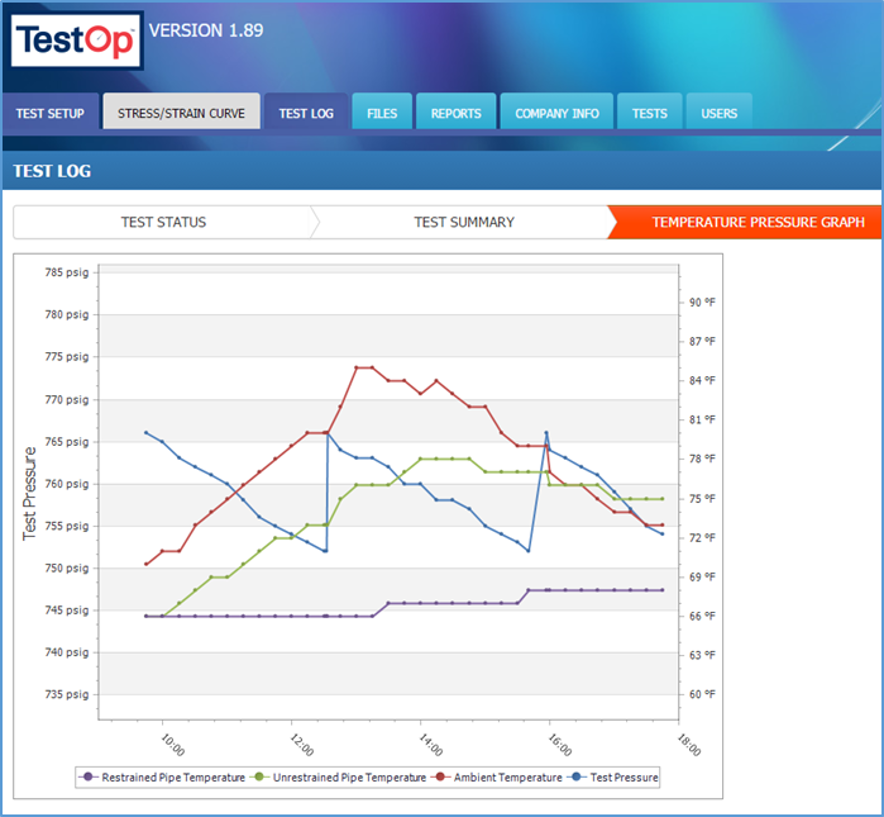
| Validation Model |
Allowable Loss |
Predicted Loss |
Test Good? |
|---|---|---|---|
| TestOp | 1.91 gal | 9.34 gal | NO |
| CSFM* | 10.31 gal | 6.35 gal | YES |
Results:
- Test failed TestOp, but passed CSFM model.
- When the pressure was lowered from 765 to 600, the pressure held for several hours. Maybe the temperature probes are in the wrong spot?
- Tracer gas could not be detected.
- RCP convinces operator engineer for retest.
Test Attempt No. 2
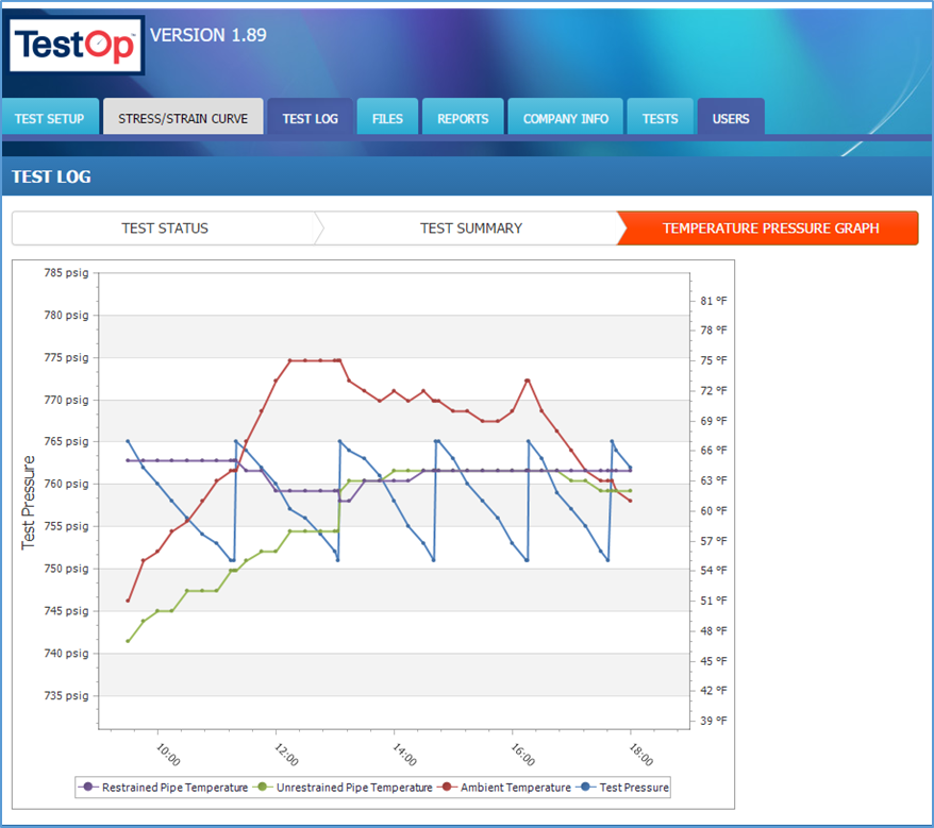
| Validation Model |
Allowable Loss |
Predicted Loss |
Test Good? |
|---|---|---|---|
| TestOp | 1.75 gal | 7.64 gal | NO |
| CSFM* | 10.31 gal | 6.63 gal | YES |
Results:
- Test failed TestOp, but passed CSFM model.
- Pipe was left at target pressure overnight to cause enough water to leak from the line to detect the tracer gas.
- Lost 125 psi overnight.
- Tracer gas was detected.
Results
Even after the line was exposed there was not a lot of evidence of water. The leak location was not observed until some coating was removed. The defect was in the long seam with water spraying out of the pipe.
VIDEO:
SEAM FAILURE DETECTED
THAT COMPETING
MODEL MISSED.
questions for you
- What would have happened if this test was deemed successful, as the ILI vendor AND company wanted to do?
- Have you experienced this situation before?
- Have you ever had a “post-hydrotest leak”?
- There’s a definite possibility this leak happened during the hydrotest and was only detected once the pipeline was put back in service.
- How are mitigating the low-frequency ERW threat your pipelines?
- Are you taking the proper steps to certify that you have a leak-free test?
Lessons Learned
-
ILI gathered intelligence, identified certain types of anomalies, but was not adequate for identifying seam material defect / lack of fusion / crack anomaly.
-
Lab analysis gathered intelligence regarding material properties and cause of failure.
-
The combination of ILI, advanced pressure testing technology and material lab sampling of repair cut-outs resulted in integrity verification and provided the necessary assurances to re-establish MAOP on this line and enable the operator to better manage the pipeline safety risks.
-
The CSFM model passed the 1st two tests, even though there was 7-9+ gallon leak present. Unless TestOp was deployed, this anomaly would not have been identified during the test.